Spray Foam R-Value Per Inch
R-value measures an insulation material's resistance to heat transfer. Closed-cell spray foam delivers R-6.5 per inch, the highest R-value per inch of any common insulation. Open-cell spray foam provides R-3.7 per inch. This guide compares both types, explains Quebec building code requirements, and helps you determine the optimal thickness for your project.
R-value indicates a material's ability to resist heat flow. The higher the R-value, the better the insulation. Spray foam insulation significantly outperforms traditional insulation materials like fiberglass batts and blown-in cellulose thanks to its cellular structure that traps insulating gas. HIZO has been installing both types of spray foam insulation for over 15 years in residential and commercial projects across Quebec.
The importance of R-value for your insulation
Thermal comfort
A higher R-value maintains stable indoor temperatures year-round, eliminating cold spots and drafts.
Energy savings
Each additional R-value point reduces heat loss and lowers your heating and cooling bills.
Reduced thickness
Spray foam achieves the same R-value in half the thickness of fiberglass, saving valuable wall space.
Built-in air barrier
Closed-cell foam acts as an air barrier, eliminating air infiltration that reduces effective R-value.
Built-in vapour barrier
At 2 inches thick, closed-cell foam serves as a vapour barrier, simplifying wall assembly.
Code compliance
Meet Quebec's R-24.5 wall requirement with just 4 inches of closed-cell spray foam.
R-value per inch: spray foam vs other insulation
Closed-cell spray foam: R-6.5 per inch
Closed-cell spray foam insulation delivers the highest R-value among common insulation materials: R-6.5 per inch (RSI 1.14 per inch). Its dense, rigid structure makes it the ideal insulation for exterior walls, basements, and cathedral ceilings where space is at a premium.
Beyond its superior R-value, closed-cell spray foam adds structural strength to walls, acts as both an air barrier and vapour barrier at 2 inches of thickness, and resists moisture absorption.
- R-6.5 per inch (RSI 1.14/in)
- Built-in air and vapour barrier
- Added structural rigidity
- Impervious to water and moisture
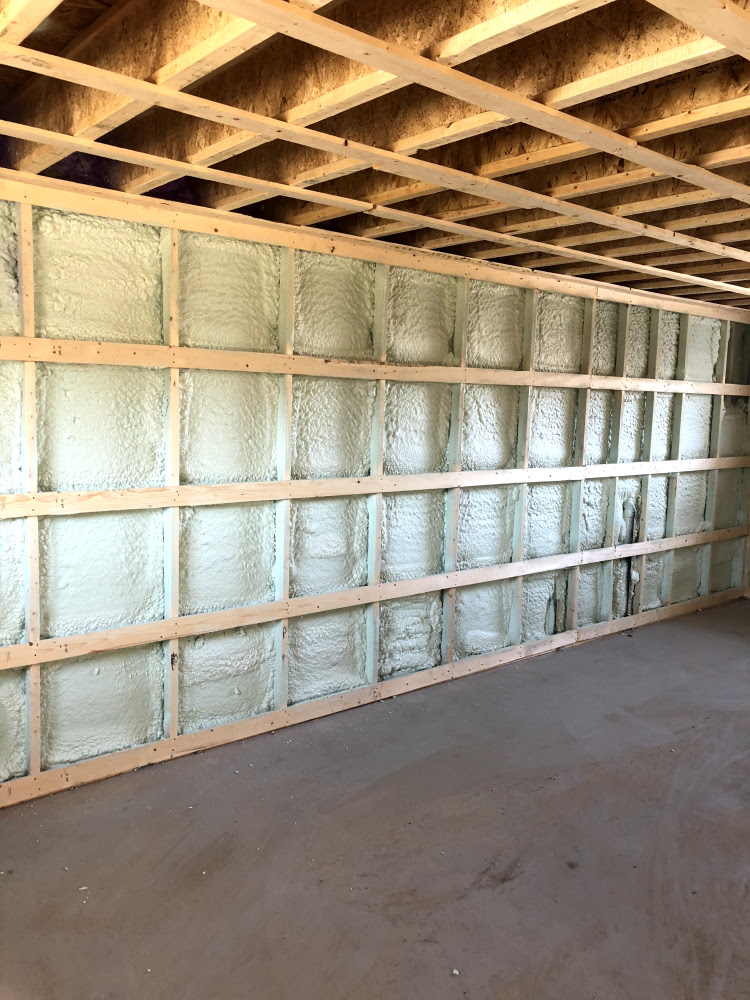
Open-cell spray foam: R-3.7 per inch
Open-cell spray foam insulation provides an R-value of R-3.7 per inch (RSI 0.65 per inch). Its soft, flexible structure expands significantly during application, making it ideal for filling wall cavities and irregular spaces completely.
While its R-value per inch is lower than closed-cell, open-cell spray foam excels as a sound insulation material and costs less per square foot. It is often chosen for interior walls, vented attics, and projects where budget is a consideration.
- R-3.7 per inch (RSI 0.65/in)
- Excellent sound insulation
- Fills irregular cavities completely
- More cost-effective option
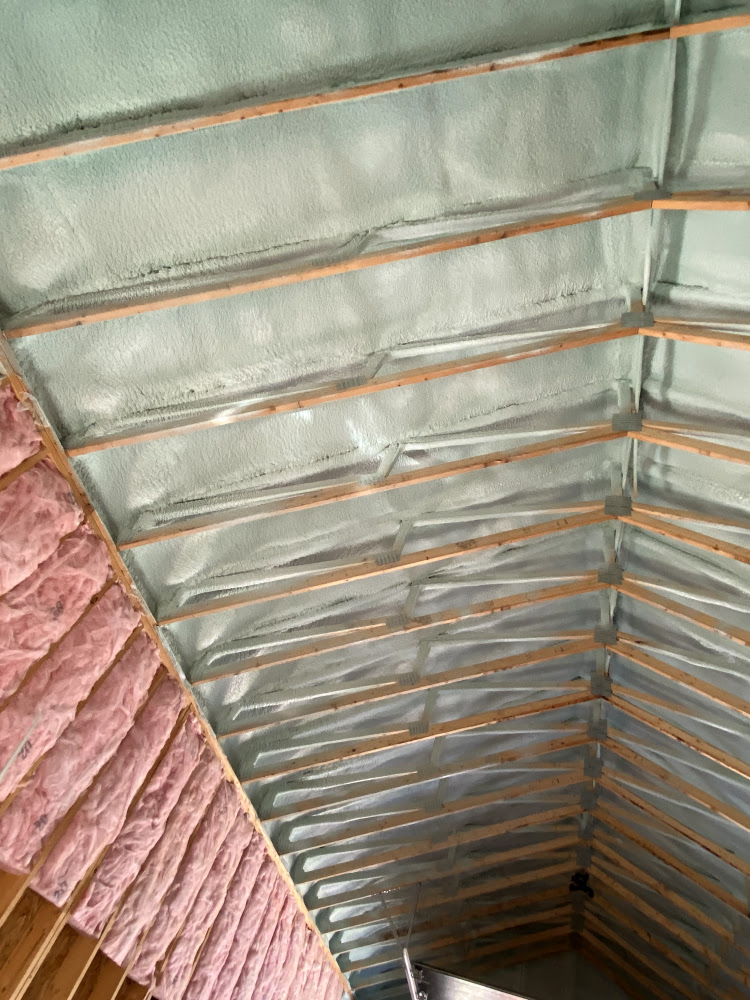
R-value comparison table
The table below compares the R-value per inch of the main insulation materials available in Quebec. Closed-cell spray foam leads significantly in thermal performance per inch.
| Insulation type | R-value / inch | Thickness for R-24.5 | Air barrier |
|---|---|---|---|
| Closed-cell spray foam | R-6.5 | 3.8 in (9.6 cm) | Yes |
| Open-cell spray foam | R-3.7 | 6.6 in (16.8 cm) | Yes |
| Fiberglass batts | R-3.1 to R-3.7 | 6.6 to 7.9 in | No |
| Blown-in cellulose | R-3.5 to R-3.8 | 6.4 to 7.0 in | No |
| Extruded polystyrene (XPS) | R-5.0 | 4.9 in (12.4 cm) | No |
| Expanded polystyrene (EPS) | R-3.8 to R-4.4 | 5.6 to 6.4 in | No |
Minimum R-values under the Quebec Building Code
Above-grade walls: R-24.5
4 inches of closed-cell foam or a combination of open-cell plus rigid board to reach R-24.5.
Roof / cathedral ceiling: R-41
6.3 inches of closed-cell foam or 11 inches of open-cell foam to reach R-41 at the roof.
Basement walls: R-17.5
Just 2.7 inches of closed-cell foam is enough for foundation walls below grade.
Slab-on-grade: R-10
1.5 inches of closed-cell foam under or around the slab perimeter to reach R-10.
Everything you need to know about spray foam R-value
What is R-value?
R-value measures an insulation material's thermal resistance, or its ability to resist heat flow. The higher the R-value, the better the material insulates. In Canada, RSI (metric thermal resistance) is also used: 1 RSI = 5.678 R. R-value depends on the type of material, its thickness, and its density.
What is the R-value of spray foam per inch?
Closed-cell spray foam has an R-value of 6.5 per inch (RSI 1.14/in), the highest among common insulation materials. Open-cell spray foam has an R-value of 3.7 per inch (RSI 0.65/in). For comparison, fiberglass batts offer approximately R-3.1 to R-3.7 per inch and blown-in cellulose R-3.5 to R-3.8 per inch.
What is the difference between closed-cell and open-cell spray foam?
Closed-cell spray foam traps insulating gas in sealed cells, providing R-6.5/in, moisture resistance, and structural rigidity. Open-cell foam has permeable cells filled with air, offering R-3.7/in with excellent sound insulation at a lower cost. Closed-cell is ideal for exterior walls and basements; open-cell is best for interior walls and vented attics.
What are the minimum R-values required by the Quebec Building Code?
The Quebec Building Code requires minimum R-values by climate zone: R-24.5 (RSI 4.31) for above-grade walls, R-41 (RSI 7.22) for ceilings or roofs, R-17.5 (RSI 3.08) for basement walls, and R-10 (RSI 1.76) for slab-on-grade. Closed-cell spray foam meets these requirements with the thinnest possible application.
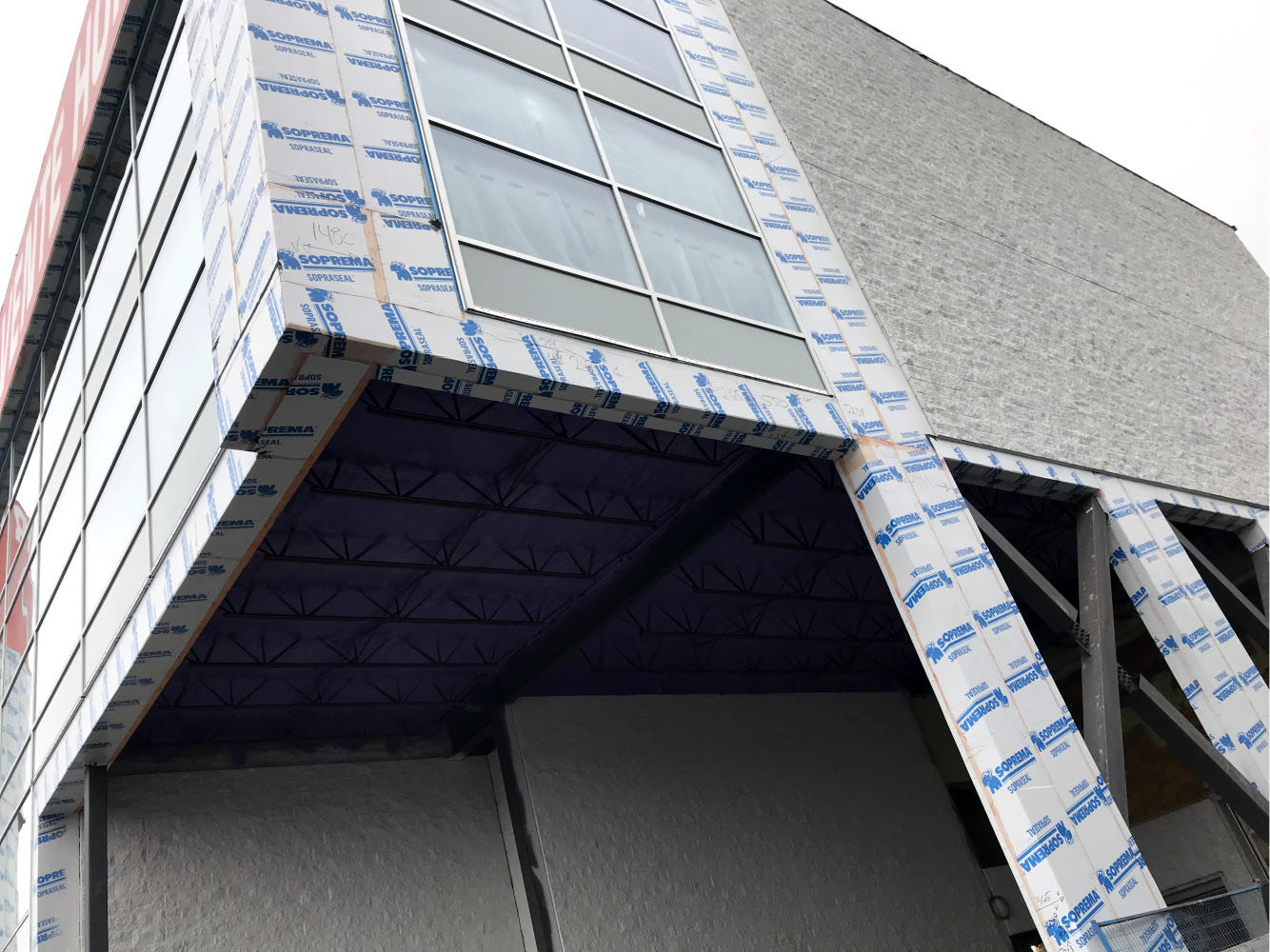
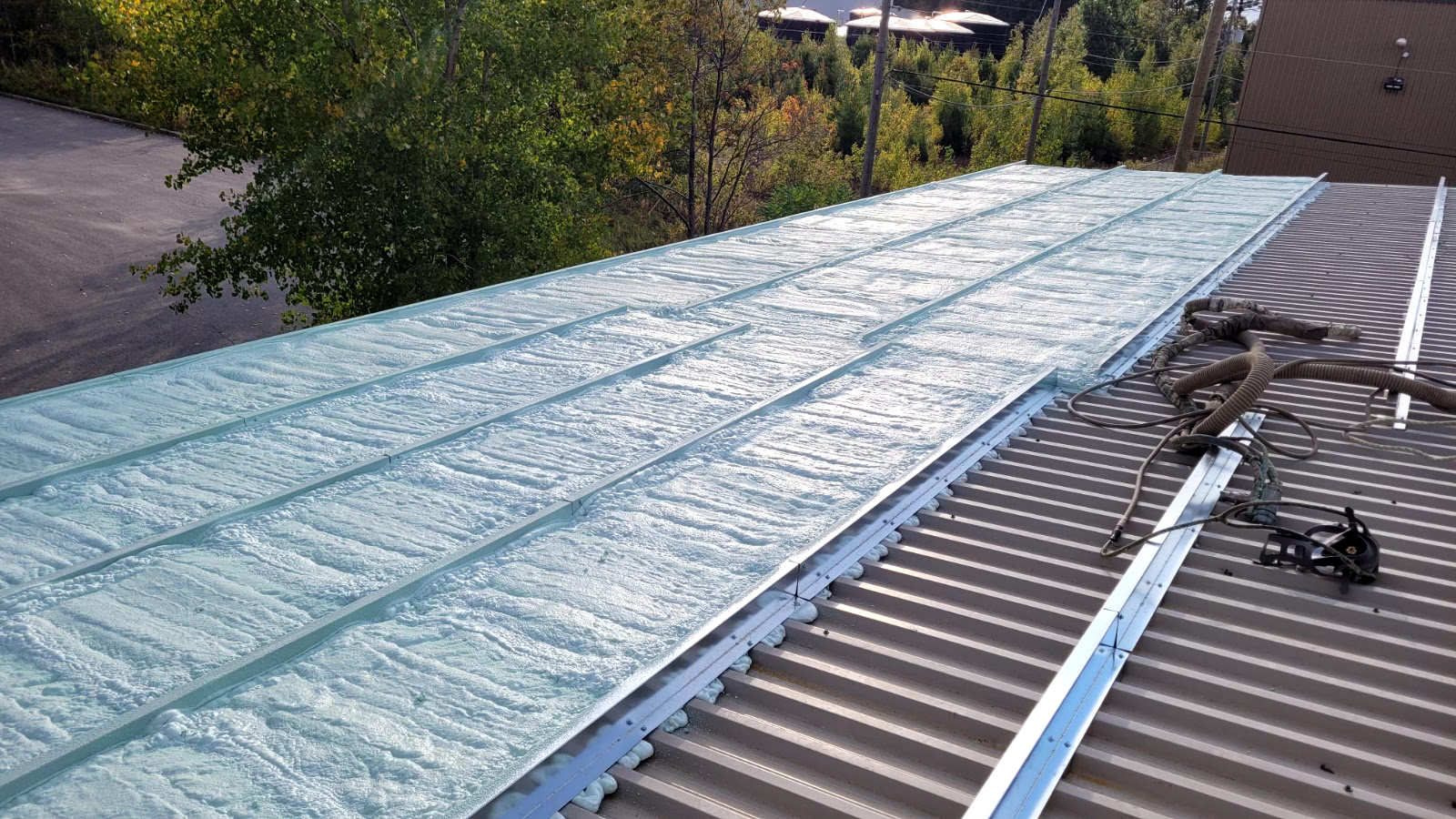
Our spray foam insulation projects
Need spray foam insulation?
Our experts calculate the exact spray foam thickness needed to achieve the optimal R-value for your building type and code requirements.